
A Brief Overview of Staten Island’s Alternative Arts Spaces
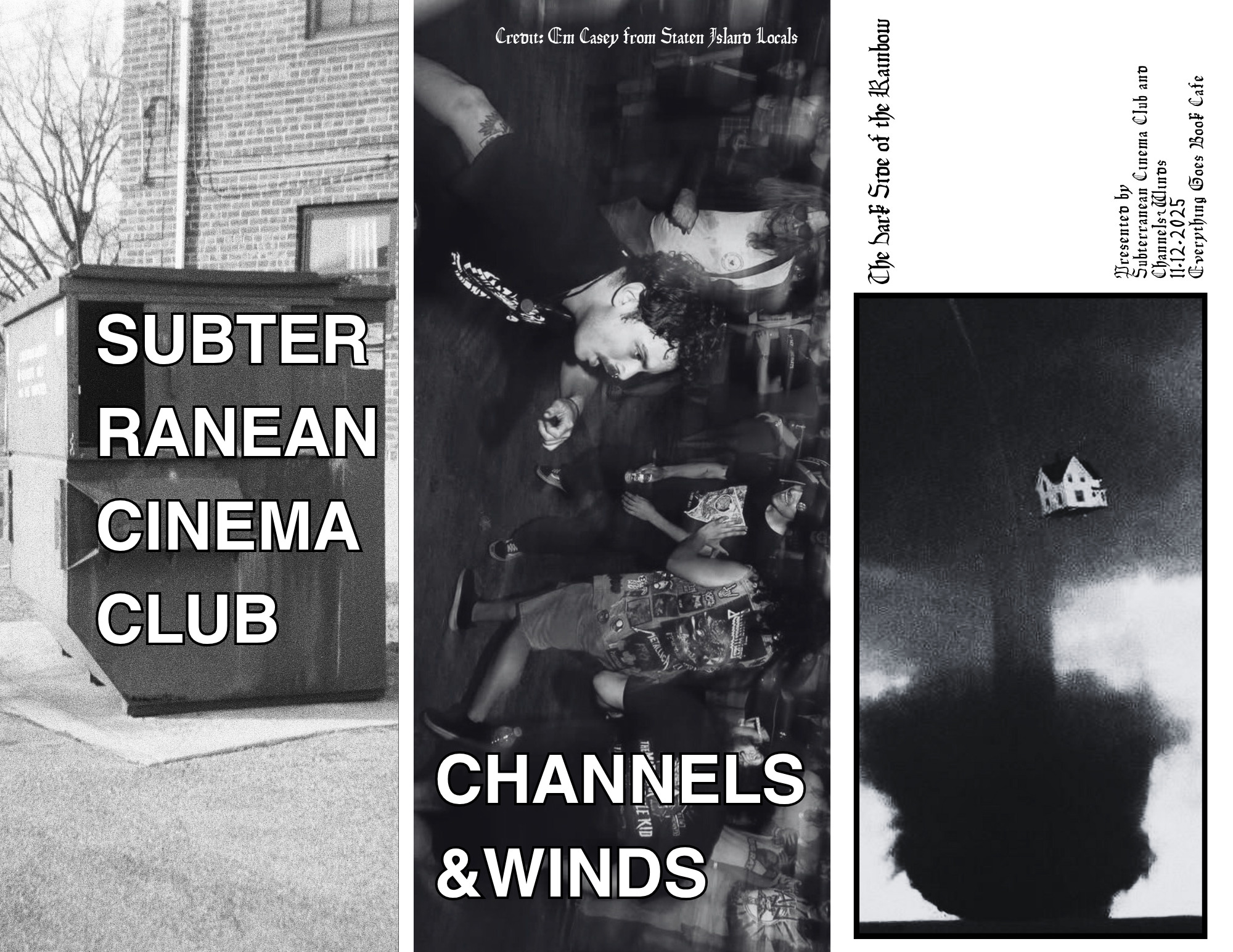
This zine was originally printed and given out at Subterranean Cinema Club with Channels & Winds on 11-12-25 for the presentation of Dark Side of The Rainbow. An urban legend of sorts, the idea goes that if you play Dark Side of the Moon by Pink Floyd alongside The Wizard of Oz, the music and the film will sync up moments, moods, and themes, lining up in ways that feel too precise to be accidental, creating something that feels both familiar and entirely new.
What follows carries that same energy. In this zine, Zoe explores “A Brief Overview of Staten Island’s Alternative Arts Spaces,” tracing how these pockets of creativity continue to push forward, make room, and reinvent what art and community can look like here. It’s a small snapshot, a nod to the ongoing work of carving out spaces where expression, experimentation, and connection can thrive.
Staten Island’s arts landscape is comprised of institutions, grassroots initiatives, and community-centered organizations. From historic landmarks to DIY venues, these spaces have nurtured creativity, fostered inclusion, and cultivated community engagement across decades. Why have some of these spaces disappeared, and why have some been able to adapt and grow throughout time? This abstract addresses the ebbs and flows of the cultural scene on Staten Island while establishing the desire by the community to foster creative spaces in an otherwise “cultural desert.”
The borough’s cultural foundations were established with Sailors’ Snug Harbor in 1833 and the Staten Island Museum in 1881. Snug Harbor’s 1976 conversion (salvation by none other than Jacqueline Kennedy Onassis) into a cultural center provided galleries, such as The Newhouse Center for Contemporary Art, performance spaces, and studios (Art Lab) that anchored the arts community. Meanwhile, the Alice Austen House, preserved in the 1970s and opened in 1985, represented a more intimate site of cultural preservation. Its later recognition as an LGBTQ+ landmark in 2017 and embrace of contemporary programming created a bridge between heritage and experimental practice.
Parallel to these institutional anchors, grassroots initiatives emerged. The Ganas Community, founded in 1979, created Everything Goes Book Café, a performance and social hub that nurtured literary readings, music, and community dialogue. The Universal Temple of the Arts (UTA), the first Black cultural center on Staten Island, established in 1967, provided low-cost arts education and live performances for youth, ensuring sustained cultural access for generations. In the mid-1990s, Community Health Action Staten Island established The Pride Center of Staten Island, which provides programs and services that cultivate community, advocate for LGBTQIA+ interests, educate and empower, and provide social support.
The 1980s also saw the founding of No Empty Space Theater, an experimental theater company led by Ken Tirado, James Stayoch, and Jeanne Cusick. It offered an outlet for original performance at a time when Staten Island’s arts were largely overlooked by mainstream venues. No Empty Space disbanded, and since then, Staten Island has been oversaturated with theater companies competing with one another amidst a landscape with few venue options for these groups.
Throughout the 2000s, the North Shore’s DIY scene experienced significant growth. Muddy Cup / The Cup / Full Cup, Martini Red, NYC Arts Cypher, and Dock Street became central venues for performance, music, and experimental arts, inviting audiences from dozens to over a hundred per event.
In 2010, two developments transformed Staten Island’s arts scene: the launch of Second Saturdays and Lumen. Second Saturdays, founded by Brendan Coyle and Amanda Curtis, stitched together galleries, cafés, and studios into a recurring monthly art walk that drew hundreds of participants. It created sustained opportunities for emerging artists while encouraging audiences to traverse neighborhoods. Meanwhile, Staten Island Arts’ Lumen festival redefined scale. Staged in warehouses, piers, and waterfront sites, Lumen attracted between 1,500 and 3,000 visitors annually, making it the borough’s largest avant-garde event. With immersive projections and live performance, Lumen proved Staten Island could host cutting-edge work for massive, diverse audiences. Both Second Saturdays and Lumen have ceased despite a growing outcry to return. The cause? Burnout, founders moving off the island, a lack of funds, and labor issues. All the ingredients for how amazing things meet their end.
Further expansion included MakerSpace & MakerPark, industrial and outdoor sites fostering workshops, exhibitions, and performances. MakerPark Radio was founded in 2017, providing outdoor arts programming and a community radio that streams daily for music lovers in addition to live concerts, screenings, and festivals. Deep Tanks Studio offered flexible spaces for experimental arts, while La Colmena empowered immigrant communities through cultural programming, and the Sri Lankan Arts & Cultural Museum highlighted diaspora heritage. Today, groups like Queer Van Kult embody the borough’s ongoing alternative spirit. By staging site-specific interventions at Snug Harbor and Alice Austen House, they honor Staten Island’s experimental past while charting new directions rooted in queer identity and performance. Thankfully, this is just scratching the surface of Staten Island’s alternative arts scene. Venues like Hub 17, Mother Pug’s, St. George Theater, Craft House, and Hop Shoppe are all providing space for artists today, intersecting nightlife with creative life.
From intimate coffeehouse performances to festivals attracting thousands, these spaces demonstrate the borough’s capacity to nurture both grassroots experimentation and large-scale cultural participation. They preserve a legacy of access, diversity, and adaptation that continues to define Staten Island’s artistic identity. They redefine the narrative that Staten Island is a cultural wasteland and rebel against the rest of the city’s falsehoods and misdirected criticisms. At our core, Staten Islanders make do with what they have; we’re scrappy. A new generation has begun to sink its teeth into the shoreline. Grassroots efforts, activism (Take Back St. George, Staten Island 4 Palestine), queerness, and culture (Muslim Sisters of Staten Island) have taken hold of this island in a way that could potentially change things for the better. Some of us are spectators, and others are participants in this shift, which begs the question: Who are you?
Here’s the next film that will be screened at the Subterranean Cinema Club.
Seeds — Adults Only, 18+.
Disclaimer: Due to the nature of this film and its explicit themes, this screening is strictly an 18+ event. No exceptions.
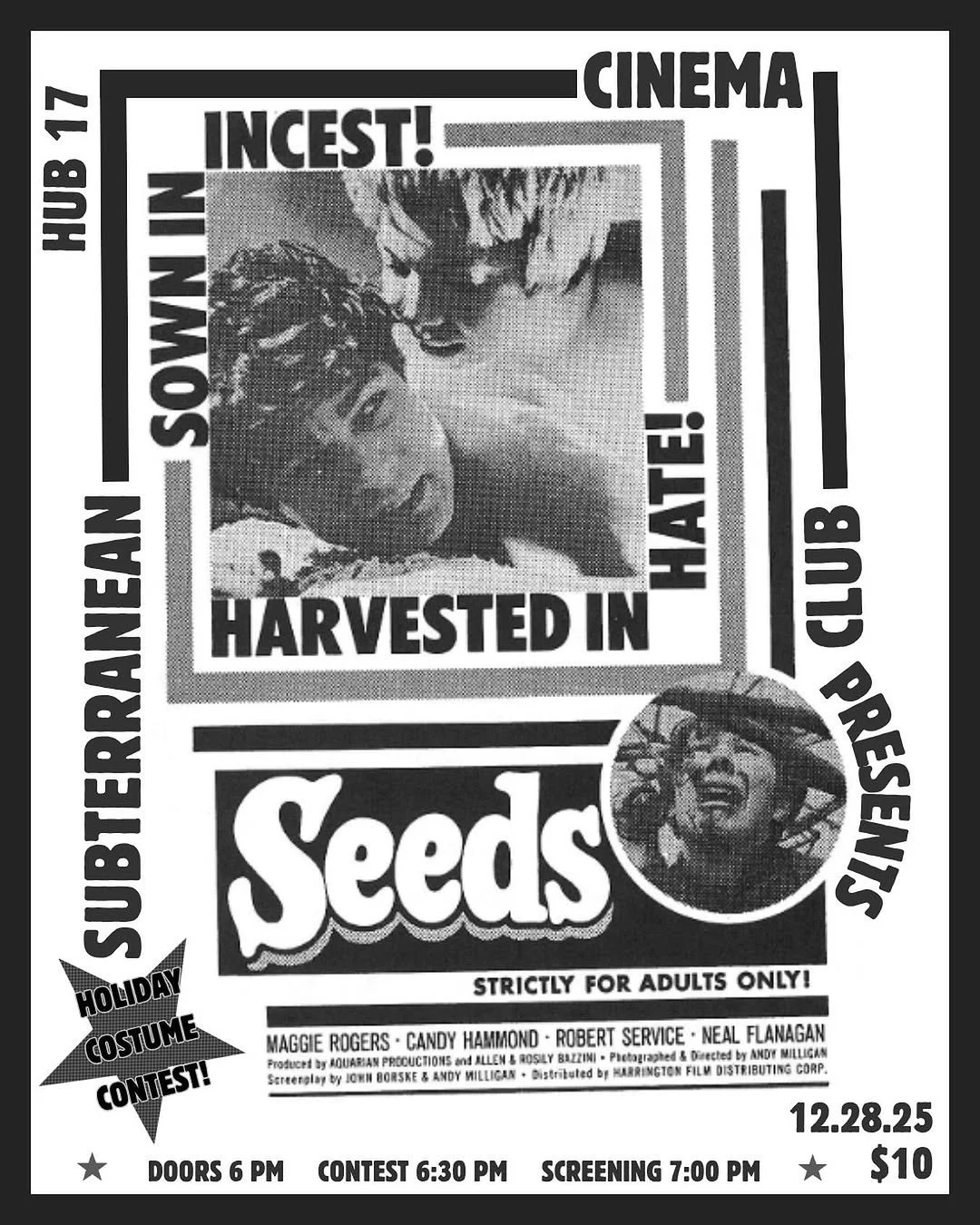
SEEDS (1968) Dir. Andy Milligan, Staten Island’s premier grind house auteur and sadist is here to ruin your Christmas
Home for the Holidays? Subterranean Cinema Club has some plans for you in December!
” CAN A GENIUS BE UNTALENTED TOO?” This, for John Waters, is the vital question posed by the films of Andy Milligan, the director behind a prolific streak of distinctively seedy exploitation vehicles.”
-Thomas Beard for ARTFORUM
This special hometown screening will include a HOLIDAY COSTUME CONTEST prior to the film. Come dressed decked out with Holiday cheer to attempt to drive away the inexplicable malice you’re about to witness. There will be prizes.
To learn more about Subterranean Cinema Club, follow on Instagram at
@Subterranean. Cinema _Club
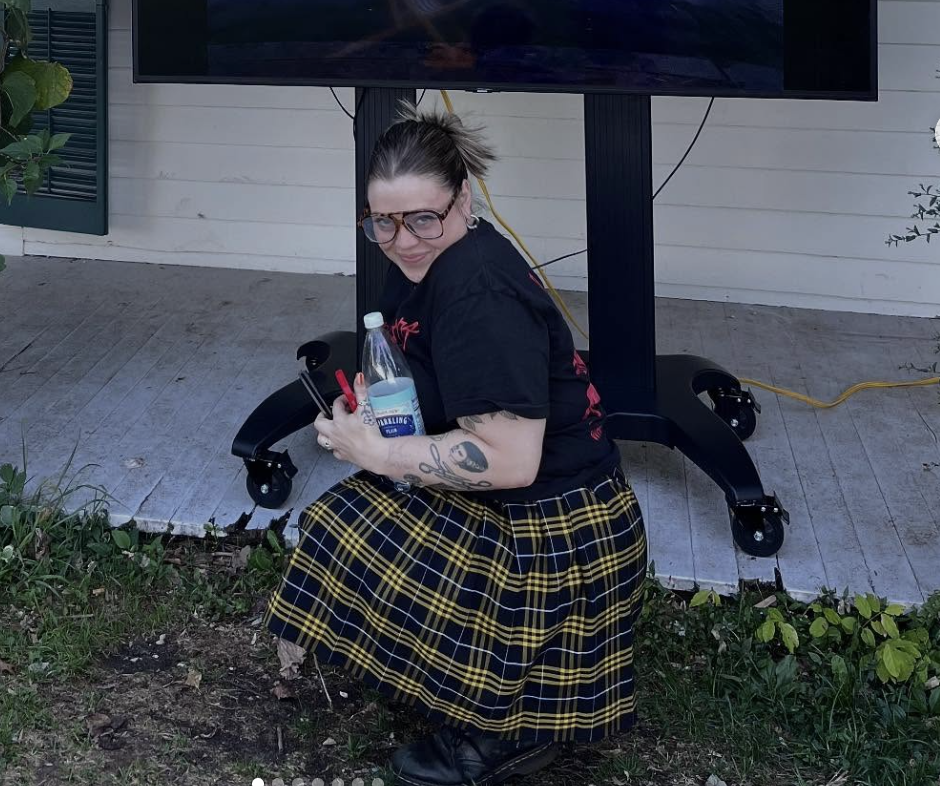
Zoë Tirado (she/her/hers) is a complex female character born and raised in Staten Island, NY. When she is not juggling the joys of parenting her cat, Honey Yucky, graduate school, and her career in arts administration, Zoë creates work that explores identity, sexuality, and the grotesque.